
Carbon Fiber Wall Straps vs. Steel Beams for Bowing Walls
Bowing walls can mean pressure outside a basement wall is pushing it inward, but choosing between carbon fiber and steel takes more than looking at the visible bow. Movement, cracks, moisture, wall construction, and system requirements can all affect the repair.
Premium Waterproofing has worked with homes and foundations since 1989. We inspect what is happening to the wall first so the recommended repair fits the actual condition.
Carbon Fiber and Steel Stabilize Bowing Walls Differently
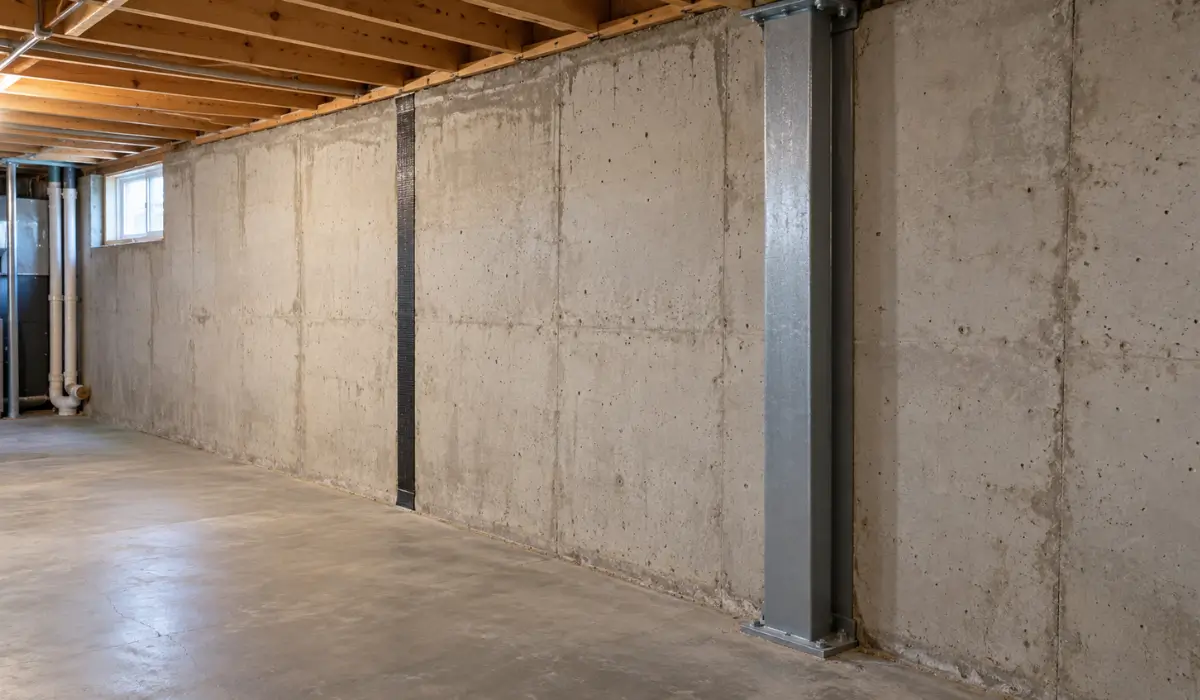
Carbon fiber and steel can both play a role in wall stabilization, but they use different approaches. Carbon fiber sits close to the wall, while steel systems use larger structural components.
Neither material should be chosen on appearance alone. Cracking, inward movement, and water intrusion can occur together, so the wall needs to be evaluated as a whole.
Our bowed wall repair systems show the stabilization options available through our team. An inspection helps determine whether carbon fiber or another method should be considered.
How Carbon Fiber Wall Straps Work
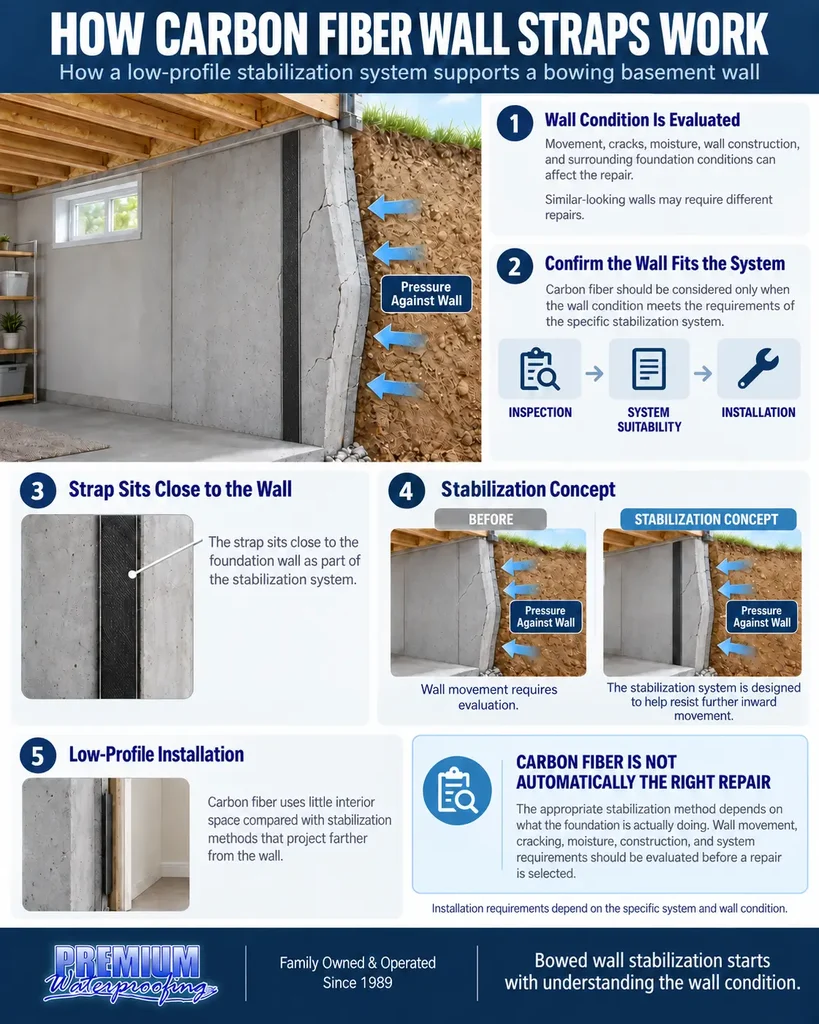
Carbon fiber wall straps are installed against a foundation wall as part of a stabilization system. Their low profile uses little basement space, which can matter when homeowners plan to use or finish the area.
Premium Waterproofing works with Fortress for bowed-wall stabilization. The appropriate use and installation of Fortress straps depend on the exact system and wall conditions, so technical decisions should follow the relevant Fortress stabilization specifications.
Carbon fiber should not be selected simply because it is less noticeable. The wall must be suitable for the system.
How Steel Beam Systems Work
Steel beam systems use rigid structural members positioned against a basement wall to resist inward movement. They project farther from the wall than carbon fiber wall straps, which may affect usable space and finishing plans.
That does not make steel a lesser option. A wall that does not meet the requirements of a carbon fiber system may need a different stabilization method.
The useful comparison is not which material is universally better. It is which system fits the wall’s movement, construction, cracking, and overall condition.
Carbon Fiber Straps vs Steel Beams: Key Differences
Carbon fiber and steel differ noticeably in their size and placement, but structural suitability matters more than which repair is easier to hide. For bowing walls, the wall condition should drive the choice.
| Factor | Carbon Fiber | Steel |
|---|---|---|
| Space used | Low-profile placement against the wall | Larger components project farther from the wall |
| Installation | Depends on the selected system | Depends on the selected steel system |
| Visibility | Typically less visually intrusive | Typically more visible |
| Wall condition | Must meet system requirements | May fit conditions requiring another approach |
| Appropriate movement | Requires inspection and system verification | Depends on wall condition and system |
| Finishing considerations | Low profile may simplify some plans | Larger components may require more planning |
A slim installation can be useful in a finished or usable basement, but only when the wall is an appropriate candidate. Homeowners who notice cracking can also review the structural signs associated with foundation cracks to understand why cracks deserve closer attention.
When Carbon Fiber May Be Considered for Bowing Walls
Carbon fiber may be considered for bowing walls when inspection findings and the specific system requirements support its use. The low profile may also be useful when preserving basement space is a priority.
Wall movement still needs to be considered alongside cracks, moisture, drainage, and other foundation conditions. A leak, for example, does not necessarily reveal the cause of structural movement.
Our article on foundation crack causes and repair options discusses why basement wall crack repair and structural stabilization can address different problems.
When Another Stabilization Method May Be Needed
Some walls may require another stabilization method when their condition does not fit the carbon fiber system being considered. The amount or pattern of movement, unusual cracking, wall construction, and other structural conditions can change the available options.
Two walls can look similar while behaving differently. Selecting a system from appearance or photographs alone can oversimplify bowing basement wall repair.
Our team also works with Titan foundation systems for foundation repair applications. For homeowners considering structural foundation repair in Batavia, IL, or another community we serve, the appropriate repair should follow the conditions found at the property rather than a preference for one material.
What Premium Checks Before Recommending a System
Premium Waterproofing evaluates more than the visible bow before recommending a wall-stabilization system. The goal is to establish what has moved, identify conditions that could affect the repair, and determine whether the wall is suitable for the system being considered.
Our inspection may consider:
Location and pattern of wall movement
Crack location and direction
Signs of water intrusion
Surrounding foundation condition
Drainage and moisture concerns
Suitability of the proposed stabilization system
These findings help our team determine whether carbon fiber wall straps may fit the wall condition or whether steel or another stabilization method should be considered. Moisture or water intrusion may need separate attention, but those conditions alone do not determine which wall-stabilization system is appropriate.
Homeowners considering structural foundation repair in Batavia, IL can check Premium Waterproofing’s Illinois service areas to confirm whether their community is served.
Bowing Wall Repair FAQs
Can carbon fiber straps repair every bowed basement wall?
No. Carbon fiber wall straps should only be considered when the wall condition meets the requirements of the specific system.
Are steel beams always better for more serious wall movement?
Not automatically. The type and amount of movement, wall construction, cracking, and other conditions can affect which stabilization method fits.
Can a leaking foundation crack cause a wall to bow?
A leaking crack and wall movement can exist together without being the same problem. Basement wall crack repair may address water entry while structural movement requires a separate evaluation.
Should the crack or wall movement be addressed first?
First determine what the crack represents. Identifying the underlying wall condition helps separate water entry from movement that may require stabilization.
WALL CONDITION → STABILIZATION DECISION
Choose a Bowing Wall Repair Based on the Wall
Carbon fiber wall straps, steel beams, and other stabilization methods should be compared based on what the foundation is actually doing. Movement, cracking, wall construction, moisture conditions, and system requirements can all affect which approach may fit.
Premium Waterproofing can evaluate a bowing wall, identify conditions that may affect the repair, and determine which stabilization approach may be appropriate.
Prefer to speak with the team? Call 630-879-6116