
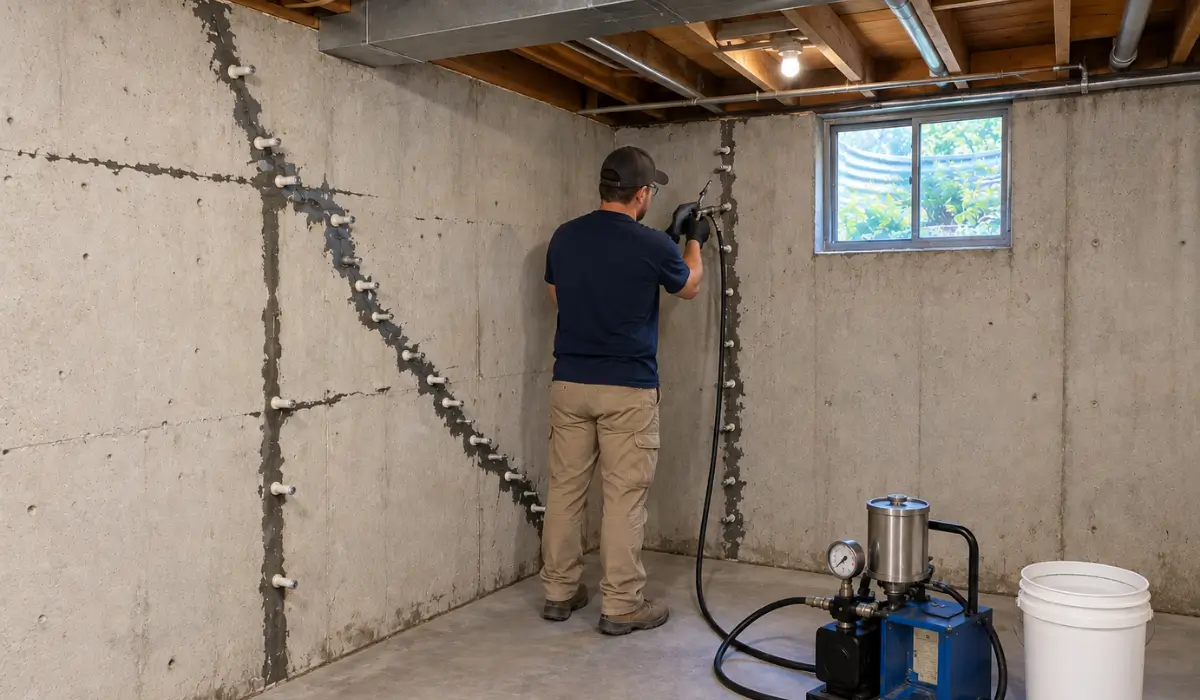
Epoxy Versus Polyurethane comes down to what the foundation crack is doing and what the repair needs to accomplish. Epoxy is generally associated with rigid bonding in suitable concrete, while polyurethane formulations used for crack injection can have different sealing and expansion properties.
The material should not be selected from one visible characteristic alone. The crack, water conditions, surrounding wall, repair objective, and the specific products and methods being used all matter.
Since 1989, Premium Waterproofing has helped protect foundations for homeowners dealing with cracks, leaks, and other foundation concerns
Epoxy and polyurethane behave differently after injection. The exact properties and appropriate applications depend on the formulation and repair system being used.
| What Matters | Epoxy | Polyurethane |
|---|---|---|
| Material behavior | Generally cures rigid | Properties vary by formulation |
| Repair consideration | Bonding suitable concrete can be a repair objective | Sealing water pathways can be a repair objective |
| Water conditions | Must be considered with the product and method | Must be considered with the product and method |
| Wall condition | Movement or damage can change the repair needed | Movement or damage can change the repair needed |
Material selection depends on the crack, wall condition, moisture conditions, and the objective of the repair.
This comparison provides general context rather than Premium Waterproofing’s product-specific selection criteria. Premium’s actual epoxy and polyurethane products and application methods should be confirmed before stronger technical claims are published.
Epoxy crack injection generally uses a material that cures rigid. Depending on the product and application, bonding suitable concrete can be part of the repair objective.
The important distinction is that not every epoxy formulation or foundation crack should be treated as interchangeable. Product requirements, crack conditions, surrounding concrete, and the repair method need to be considered together.
Our foundation crack repair service addresses cracks and related foundation concerns. Premium’s specific epoxy products and selection criteria should be verified before publication.
Polyurethane crack injection commonly involves formulations with properties different from rigid epoxy. Depending on the product, polyurethane used for concrete crack repair can react or expand during application.
Water entry can be an important part of the repair decision, but Premium’s actual polyurethane products and selection criteria should determine any company-specific recommendation.
A leaking foundation crack can provide useful information while water is present. Where the water starts, when it appears, and whether it returns can help document how the leak behaves.
Document these details while the leak is active:
Stains, damp areas, and mineral deposits can also provide clues after the water disappears. Small basement leaks can signal a larger moisture problem when water repeatedly finds a path into the basement.
Photos and notes preserve conditions that may no longer be visible once the wall dries.
Crack location and wall condition matter because choosing an injection material is only one part of understanding what the foundation needs.
Crack width alone does not determine whether epoxy or polyurethane should be used. Surrounding concrete, visible movement, water history, and the repair goal also affect the decision.
Timing adds useful context. Hairline foundation cracks noticed during winter can raise questions about when the crack appeared, whether it changed, and whether moisture is present.
Poured concrete crack repair can include injection when the crack and surrounding wall are suitable and placing material within the crack matches the repair goal. Injection is one repair method, not a blanket solution for every crack in a poured concrete wall.
The conditions that can contribute to foundation cracks matter because the visible opening does not always tell the whole story. Understanding the surrounding condition helps determine whether injection fits the problem.
When the wall requires another type of repair or added support, Premium Waterproofing also installs Titan foundation repair systems.
Stage 1 and Stage 2 are terms used in Premium Waterproofing’s foundation crack repair process. They are company-specific terms rather than standard industry labels for epoxy and polyurethane.
Stage 2 includes high-pressure crack injection and the cross-drill method. Because these methods are part of Premium’s repair process, Stage 2 should not be interpreted as another name for either injection material.
For homeowners, the useful distinction is that the injection material and Premium repair stage are separate decisions. Which stage, material, or method fits an individual crack depends on Premium’s repair criteria.
Before crack injection, the repair should have a clearly defined purpose. Previous leaks, visible changes, earlier repair attempts, and photos of active water can help describe the problem before a method is selected.
Because the procedure can vary with the material, crack, wall condition, access, and repair method, make sure you understand three things:
A foundation crack repair has a defined scope. Knowing that scope helps you understand what the proposed work addresses without assuming it covers a separate foundation condition.
Material Questions
Epoxy is generally considered when bonding suitable concrete is part of the repair goal, while polyurethane is commonly considered when sealing water entry is the main concern. The appropriate option also depends on the crack, surrounding concrete, water conditions, visible wall movement, and what the repair needs to accomplish.
It depends on the crack and surrounding conditions. Previous water entry matters, but we would not choose a material based only on whether the crack is wet or dry.
“Permanent” is too broad without knowing why the crack formed and what is happening with the wall. Sealing a water path does not automatically correct a separate foundation problem.
No. Width provides useful information, but water entry, location, surrounding concrete, visible movement, and the repair goal can also affect the choice.
A photo can show leakage or visible changes, but it may not show enough about the surrounding wall or crack history. Pair photos with details about when the problem occurs and how it has changed.
You do not need to choose epoxy or polyurethane before the crack is evaluated. Start with what you can observe and what that information changes:
These observations help explain why one repair method may be recommended over another. You do not need to diagnose the crack or select the injection material yourself.
Choosing epoxy versus polyurethane depends on the crack, water conditions, wall condition, and purpose of the repair. The material and method should fit the problem rather than be selected from appearance alone.
Premium Waterproofing has been protecting homes and foundations since 1989. Our family-owned waterproofing company history began with Brent Bachtell in 1989. We serve homeowners and contractors throughout Fox Valley and Northeast Illinois, including the communities within our service area.
For a foundation crack or recurring basement leak, send Premium Waterproofing your crack and leak details, including where and when water appears, whether the crack has changed, and any photos showing the leak while it was active. For questions about your foundation crack, call Premium Waterproofing at 630-879-6116