
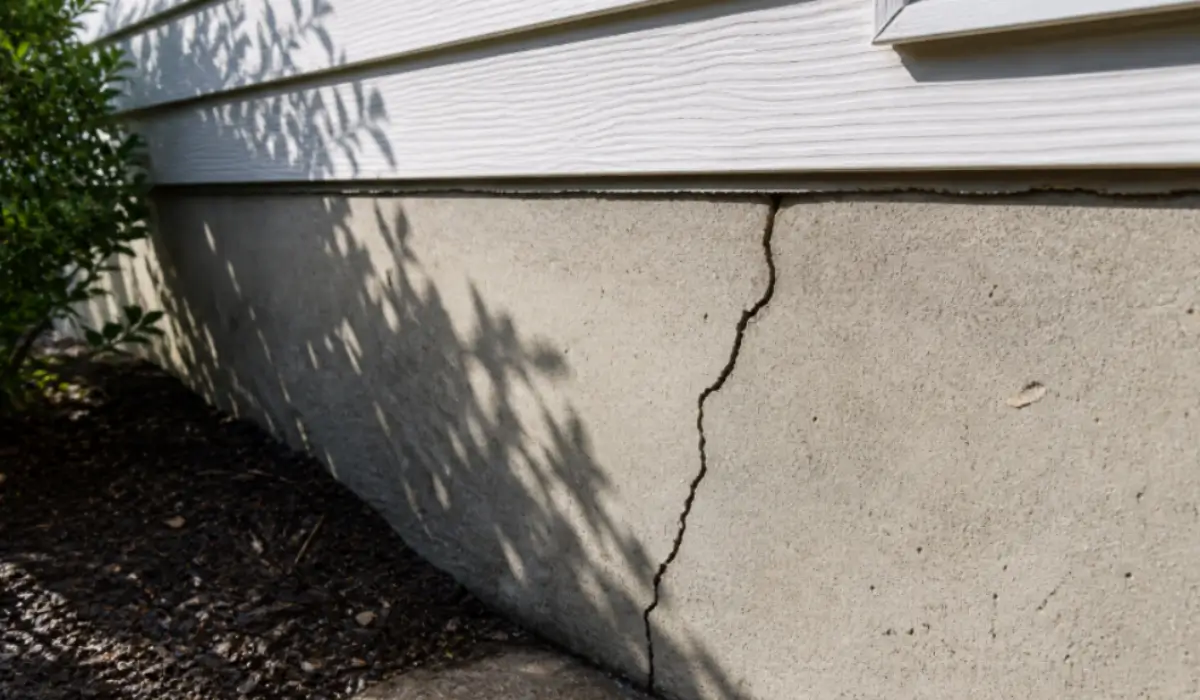
If foundation cracks seem wider in summer, temperature and soil movement are usually the reason. Heat, drying soils, and structural stress can make cracks that get worse more noticeable, and in some cases reveal conditions worth evaluating.
Homes often show subtle changes long before major damage appears. Warm weather can expose shifts homeowners did not notice in spring, and those changes can range from harmless expansion to early warning signs of structural stress.
Premium Waterproofing has helped homeowners understand that difference before small issues turn into costly repairs. Summer crack changes can also relate to moisture patterns around a home, which is why spring drainage warning signs often connect to what foundations do during hot, dry months.
Warm weather can cause concrete and masonry to expand, and even small changes can make existing cracks appear larger. In many homes, the visible crack is only the surface sign of stress occurring below.
Concrete, steel reinforcement, masonry materials, and dry soils respond differently during extreme heat. Expansion and shrinkage may increase pressure around existing weak points.
Concrete and steel expand during prolonged summer heat exposure.
Drying soil contracts and may reduce foundation support.
Expansion stress transfers force through structural weak points.
Hairline foundation cracks may widen during heat stress cycles.
| Material | Warm Weather Response | Possible Effect |
|---|---|---|
| Concrete | Expands with heat | Hairline cracks may widen |
| Masonry block | Joint movement may increase | Step cracking may show more |
| Steel reinforcement | Transfers expansion stress | Existing weak points react |
| Drying soils | Shrink in drought | Foundation support may shift |
A crack may widen only slightly, yet repeated expansion and contraction can still increase structural pressure over time. While one hot season rarely causes major damage alone, repeated cycles can gradually magnify weaknesses.
Guidance from concrete thermal movement guidance and expansive soil behavior research supports the role temperature and moisture shifts can play in foundation behavior.
Warm weather often reveals conditions that already existed but were less visible. In many cases, cracks appear more active in summer because several factors are working together.
These are the conditions where cracks that get worse during hot weather tend to become more visible to homeowners.
Reasons cracks may look worse include:
We regularly tell homeowners that the heat did not always create the crack. More often, it exposes conditions already underway. For minor cracking, our article on winter crack repair methods explains how cold-weather stress often connects to summer changes.
Dry soil can place different stress on a foundation than saturated soil, and that shift often matters as much as the crack itself. In many homes, soil behavior drives more issues than foundation materials alone.
During extended heat, clay-heavy soils often shrink. When soil pulls away from foundation walls, support may lessen, which can contribute to uneven settlement pressure and widening cracks.
This is often overlooked in generic crack articles, yet it is one of the most common summer drivers we inspect. In areas with shrink-swell soils, this condition contributes to patterns homeowners may mistake for cosmetic cracking.
One side of a home may dry faster than another, creating uneven forces against the foundation. A stair-step crack or widening vertical crack sometimes reflects that imbalance more than material failure itself.
A small cosmetic crack may simply respond to changing conditions, while a widening crack paired with wall bowing may suggest something more serious. Crack pattern often matters more than crack size alone.
Where lateral pressure is present, some homes may need stabilization rather than sealing alone. Our bowed wall repair systems address those structural conditions when stress goes beyond surface repair.
A practical approach is monitoring cracks over time. Even simple observations can help reveal whether a crack is behaving normally or becoming more active.
These monitoring steps often help:
Those patterns often show whether changes are temporary drift or active structural stress.
We suggest watching more than the crack width alone. Monthly checks for wall separation, floor slope changes, sticking doors, and soil pulling away near the foundation often reveal whether conditions are progressing.
Some crack patterns deserve more attention than others, because not all widening cracks carry equal concern. Pattern, location, and progression often matter more than crack size alone.
Vertical cracks are often linked to settlement or shrinkage. Some remain stable for years, while others widen gradually when stress continues, which is why changes should be monitored.
Step cracks in masonry can reflect stress along mortar joints. A small older step crack may remain low concern, but a widening step crack that changes over time deserves closer review.
Horizontal cracks deserve greater caution because they may point to wall pressure or structural stress. When those cracks widen during summer, evaluation is usually wiser than waiting.
When crack changes appear alongside water intrusion, basement waterproofing systems may also be part of a broader solution.
We separate cracks into three practical categories.
Hairline vertical cracks may simply need monitoring. Vertical cracks that widen over time or growing stair-step cracks often justify inspection. Horizontal cracks paired with wall bowing usually deserve faster structural review.
That kind of severity comparison is often missing from generic crack articles, yet it helps homeowners make better decisions faster.
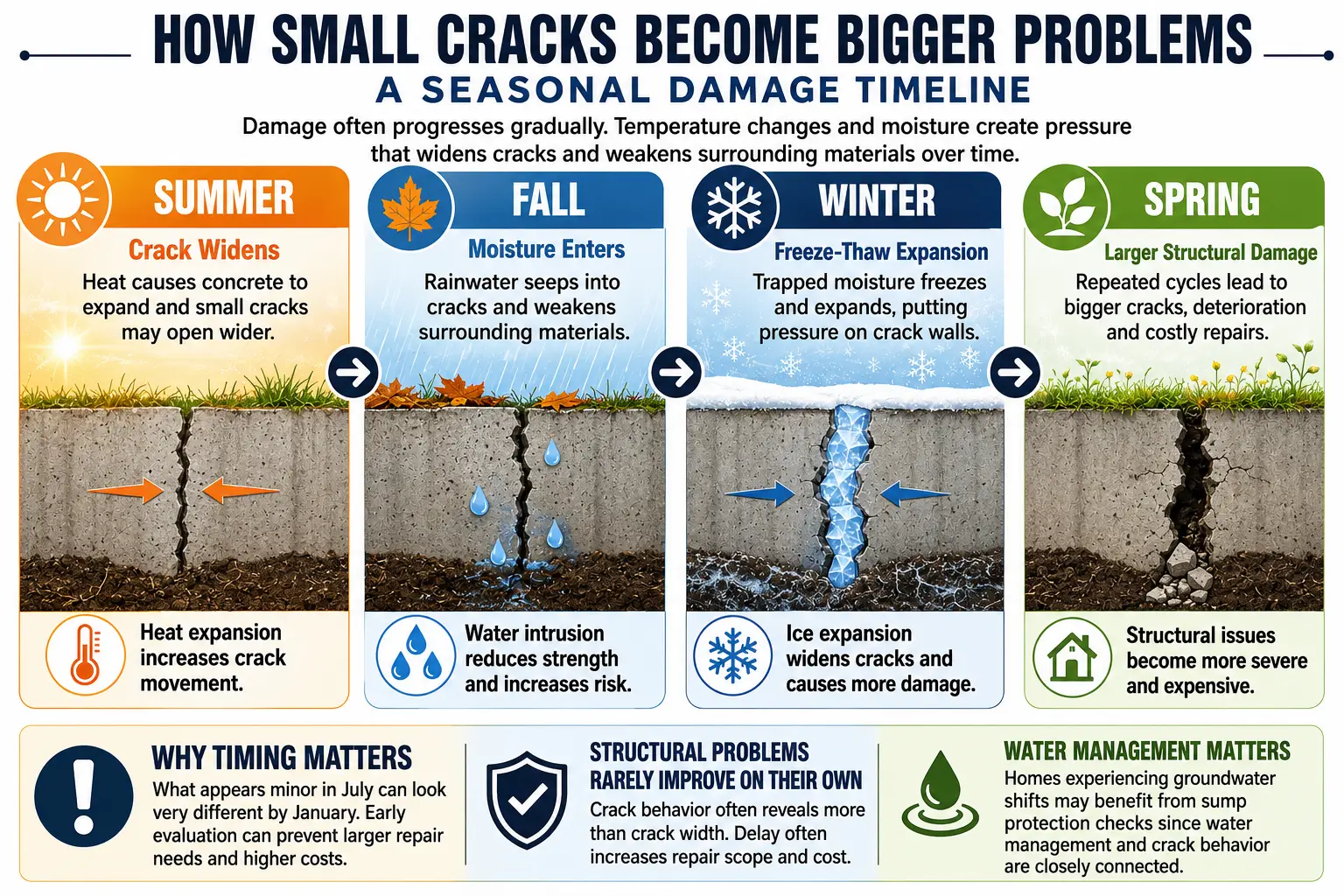
Cracks that widen in summer often become more vulnerable as seasons change. What looks minor in dry weather can become a larger repair concern once moisture and winter conditions arrive.
This is why foundation cracks that get worse in summer often lead to larger problems once colder conditions return.
Some cracks need sealing while others need structural correction, and knowing the difference matters. The goal is not simply repairing a crack, but protecting long-term stability.
Repair alone may be appropriate when the crack width remains stable, no wall displacement exists, and moisture intrusion is absent. In those cases, conditions may be minor rather than structural.
People searching foundation crack repair near me often find some problems can be resolved with straightforward repairs, especially when changes have been monitored early.
The situation changes when cracks show widening plus warning signs such as horizontal displacement, bowing walls, repeated growth, or framing shifts. Those conditions may call for stabilization rather than sealing alone.
We sometimes inspect homes where a small stair-step crack was left alone during one dry summer because it seemed cosmetic. By the following winter, moisture intrusion and added wall pressure had turned a minor crack repair into a structural stabilization project.
That progression is not unusual, which is why timing matters.
We believe honest evaluation matters here. Not every crack needs major repair, but cosmetic repairs should not be used where structural correction is needed.
The best repair does more than close a crack. It addresses the cause behind the crack and helps restore long-term stability.
Brent Bachtell, who founded Premium Waterproofing in 1989, often emphasizes that the best crack repair is not the fastest patch, but the repair that addresses why movement started in the first place.
Our foundation repair solutions are often part of those conversations when conditions point beyond surface cracking. Homeowners in our local service areas frequently ask whether monitoring is enough or whether stabilization may be wiser before damage compounds.
The right next step depends on how much your cracks are changing and whether stability is being affected. Summer crack growth does not always signal major repair, but changing patterns are worth understanding early.
We review every foundation carefully before considering a project complete, because details matter long after a repair is finished.
Storm season does not wait. If foundation cracks or moisture patterns change, early action can prevent larger problems. Premium Waterproofing reviews every project carefully before considering it complete, because details matter long after the work is finished.
Get help choosing lasting protection for your home before seasonal damage gets worse.
Request an Evaluation Call (630) 879-6116