
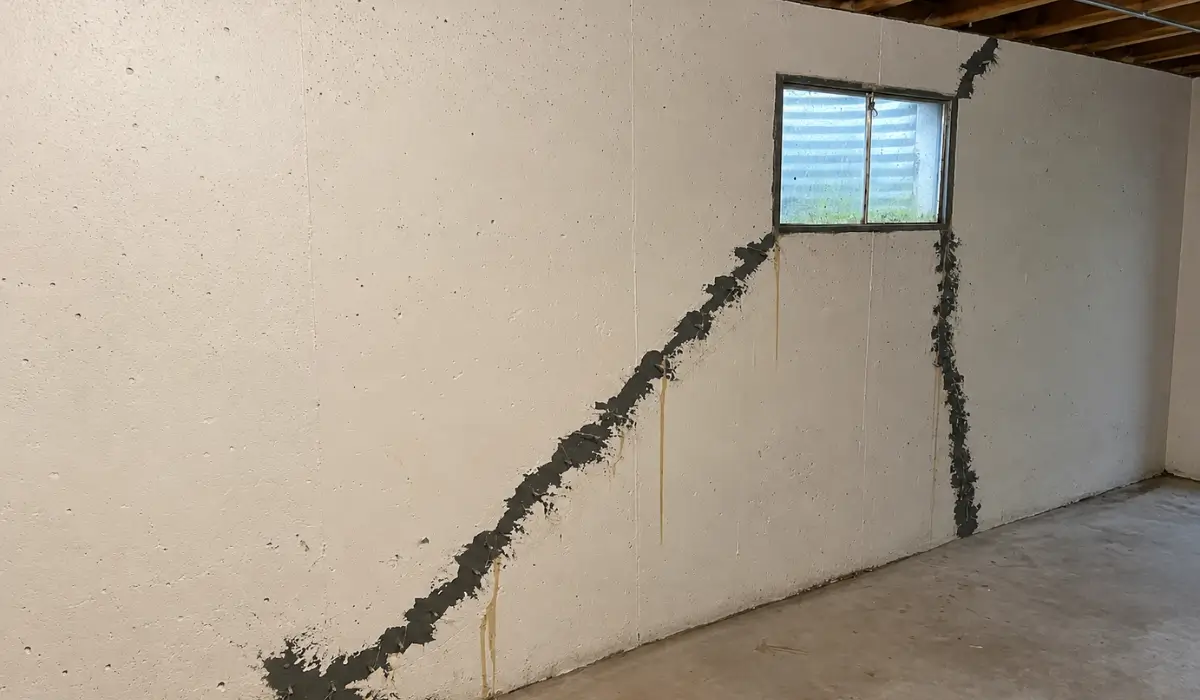
A foundation crack does not automatically mean your foundation is failing. Its direction, water seepage, wall movement, displacement, and changes over time help determine what it may mean and what type of foundation crack repair may be needed.
Premium Waterproofing has been protecting homes and foundations since 1989. With decades of hands-on experience, we understand why visible foundation wall cracks need to be considered alongside water, wall condition, and signs of movement. A dry opening in a straight wall presents a different situation from one that leaks or appears with bowing or shifting.
Concrete or masonry can change over time for different reasons. For example, concrete can develop openings as it shrinks, a process addressed in the American Concrete Institute’s material on concrete cracking and shrinkage.
What matters is the surrounding condition. Direction, wall type, water seepage, displacement, and changes over time help distinguish a localized crack from a problem that needs closer attention.
| What You Notice | What It May Mean | What To Consider Next |
|---|---|---|
| No water or wall movement | The crack may be localized | Document changes and consider localized repair |
| Water or staining | Moisture is entering | Determine whether the crack is the only moisture path |
| Bowing or shifting | The wall may be moving | Have the wall evaluated |
| Crack changing over time | The condition needs attention | Compare changes and have it reviewed |
Visible conditions can provide useful clues, but the crack and surrounding foundation should be considered together.
This is a starting point, not a diagnosis. When the wall remains straight and the problem is limited to the crack, foundation crack repair services may be appropriate.
Crack direction provides useful clues, but shape alone does not determine the repair. Moisture, displacement, wall type, and signs of movement give the pattern its practical meaning.
A vertical crack in a poured concrete foundation wall does not automatically mean the foundation is failing. Concrete can develop these openings as it cures and changes, so the surrounding wall matters too.
If the area leaks, the sides no longer line up, or the wall appears to be moving, the problem may extend beyond sealing the opening. Shrinkage, moisture, and foundation movement can contribute to the condition, so the cause and appropriate repair depend on more than direction alone.
A diagonal crack by itself does not give you the answer. Its location and surrounding conditions matter more than the angle alone.
Water, displacement, nearby cracking, or movement around corners and openings can change the level of concern. Several signs in the same area give more reason for closer evaluation than an isolated diagonal line in an otherwise stable wall.
Horizontal cracks deserve closer attention when they appear with bowing, shifting, or inward movement. The key question is whether the surrounding wall has also moved.
A straight wall presents a different problem from one that is displaced. Sealing the opening does not stabilize a wall that has moved.
Stair-step cracks usually follow mortar joints in block or masonry foundations. A repair method used for poured concrete cracks may not fit masonry because the materials and crack paths differ.
Shifted blocks, opening gaps, moisture, or visible wall movement can indicate that the concern extends beyond the cracked mortar joint.
Bowing, shifting, tilting, or displacement changes the repair question because the wall itself may be moving. Filling the opening would not correct that movement.
When the wall needs support rather than localized crack repair, foundation stabilization systems using Titan Products may be appropriate. The repair needs to address the wall, not just the visible crack.
Water changes the problem by adding a potential moisture path. A dry crack may call for monitoring or localized repair, while a leaking foundation crack also requires attention to where the moisture is coming from.
Dampness, staining, mineral deposits, or seepage after heavy rain can show where moisture is appearing, but they do not prove structural damage. Surface water, groundwater, condensation, and conditions around the foundation are among the causes of basement moisture identified by the University of Minnesota Extension.
Stopping water at the visible opening and determining why moisture is reaching the foundation are two different repair questions. Colder weather can make existing moisture problems more noticeable, so homeowners may pay closer attention to hairline foundation cracks in winter even when the damage itself is not new.
Two similar-looking cracks can require different repairs. A leaking opening in a wall that remains straight may call for localized basement wall crack repair, while one associated with bowing, shifting, or displacement requires attention to the wall movement itself. After periods of heavy rain, foundation problems can become more noticeable, making it especially important to look for water entry and signs of wall movement.
After more than three decades in the waterproofing business, we know similar-looking cracks can point to different repair needs. What matters is the condition of the surrounding foundation.
Wall type, water intrusion, visible movement, location, and changes around the damaged area help distinguish a localized problem from one involving moisture or wall movement. A leaking opening in a poured concrete wall, for example, presents a different repair question from one beside a bowed or shifted wall.
We consider these conditions together rather than focusing only on the visible damage. We treat every job like it is our own home, and homeowners should understand why a repair fits the condition before moving forward.
Crack injection may be appropriate for certain localized cracks in poured concrete foundation walls when the surrounding wall is not showing movement. Because poured concrete crack repair differs from repairing cracks along mortar joints, wall material also matters.
Injection may fit: a suitable localized crack in a poured concrete wall without signs that the surrounding wall is moving.
Injection is not structural stabilization: a bowed, shifted, or moving wall requires the movement itself to be addressed. Injecting the crack does not stabilize that wall.
Visible wall movement is a reason to look beyond localized crack repair. Signs that deserve closer attention include:
These signs do not identify the exact repair by themselves, but they indicate that sealing the crack may not address the whole problem.
When visible movement suggests the concern extends beyond waterproofing or localized crack repair, an appropriately qualified structural professional may be needed. FEMA’s building performance and structural safety work provides broader building-science context for structural performance rather than a method for diagnosing an individual foundation crack.
Common Questions
Take clear, dated photos and check the surrounding wall for water, staining, displacement, bowing, or other visible changes. Those observations can help establish whether you are dealing with an isolated crack or signs that deserve closer evaluation.
No. A leaking foundation crack shows that moisture has a path into the basement, but water alone does not prove structural damage. Bowing, shifting, or displacement raises a different concern because those signs involve wall movement.
Some cracks in poured concrete foundation walls may be suitable for injection. The crack and surrounding wall both matter, and injection alone will not correct a wall that has bowed or shifted.
Monitoring can help show whether a crack is changing. Water entry or visible wall movement, however, gives you a reason to have the condition evaluated rather than relying on observation alone.
Foundation crack repair should be based on what is happening around the crack, not appearance alone. A straight, dry wall, a leaking crack, and a wall showing visible movement can point to different repair decisions.
As a family-owned company, practical solutions and clear communication matter to us. That approach has shaped our waterproofing experience since 1989 and how we help homeowners make sense of foundation and basement problems.
Not sure whether your crack is localized, allowing water in, or appearing with wall movement?
Request a foundation crack assessment so our team can evaluate the condition and discuss the appropriate next step.