
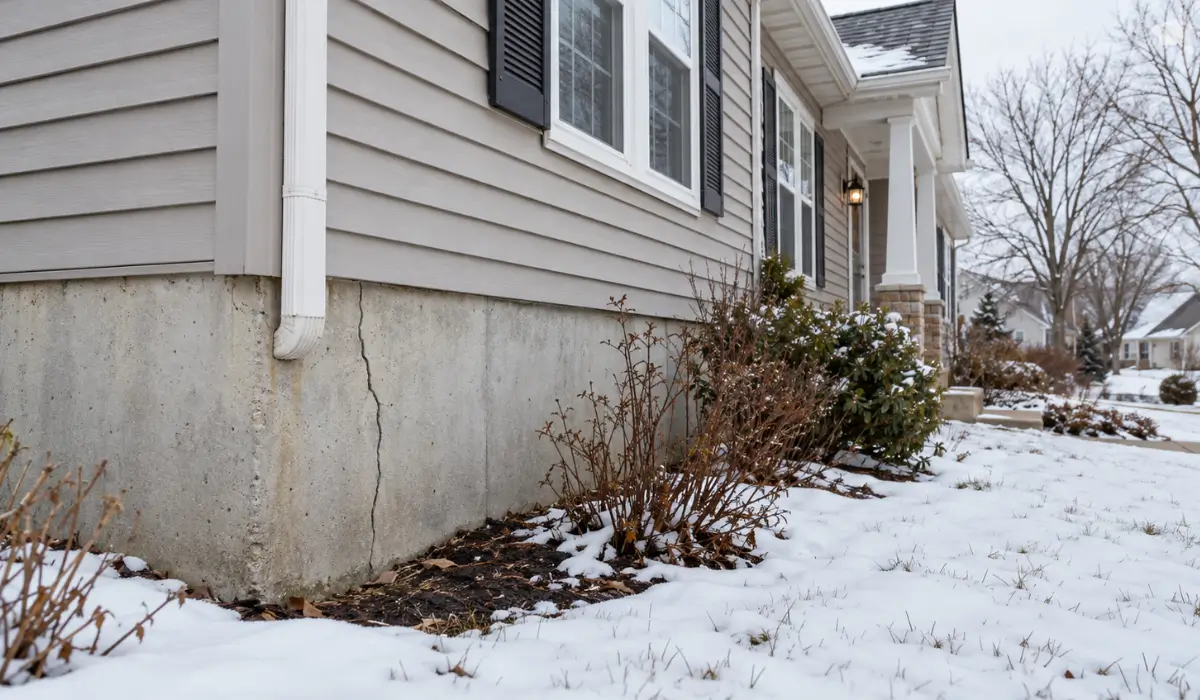
Not every foundation crack gets worse in winter. Some stay stable, while others become more noticeable as cold temperatures, moisture, and movement change conditions around the foundation.
Premium Waterproofing has worked with foundation and basement water problems since 1989. We help homeowners understand what a changing or leaking foundation crack may mean before deciding whether foundation crack repair makes sense.
No. A crack can remain stable all winter. Moisture, concrete condition, previous movement, temperature changes, and conditions around the foundation can affect what happens.
A crack that becomes wet or looks different after a freeze deserves attention, but it does not automatically point to serious structural damage. Water intrusion and foundation movement can happen in the same area without being the same problem.
Knowing why foundation cracks form can help you compare the original problem with changes that appear during colder weather.
Cold alone does not mean concrete will crack. Moisture becomes more important when concrete repeatedly freezes and thaws.
Water expands when it freezes. When concrete contains enough moisture, repeated freezing and thawing can create internal stress and contribute to deterioration over time. The American Concrete Institute addresses this mechanism in its technical information on freeze-thaw resistance in concrete.
An existing crack may also give moisture a path into the concrete. That does not mean every wet crack will grow. It does mean changes are worth documenting rather than assuming cold weather alone caused damage.
A crack can give water a path into a basement even when the opening has changed very little. Dampness, staining, or seepage may become more noticeable during wet periods or winter thaws.
A leaking foundation crack shows that moisture is getting in. It does not reveal why the crack formed or prove that the foundation is moving.
When water keeps entering at the same location, the condition of the wall helps determine whether foundation crack repair may be appropriate. Moisture evidence and movement evidence should be considered separately before selecting a repair.
A crack that leaked before may show moisture again as winter conditions change. Snow accumulation, precipitation, and thawing can change moisture conditions around the foundation.
A recurring leak shows that water is getting in, but it does not prove the crack has structurally worsened. That distinction matters because stopping water intrusion and addressing foundation movement are not necessarily the same repair.
Repair materials also serve different purposes. Our epoxy and polyurethane comparison shows why the crack’s condition matters when considering an injection material.
Look for:
Winter weather alone does not determine whether a crack needs repair. Active seepage, visible progression, recurring leakage, and wall movement give homeowners more useful information than the season by itself.
A dry, unchanged crack may be something to document and monitor. Foundation cracks with active seepage, repeated leakage, or visible progression give you more reason to have the condition assessed.
The repair also needs to match the problem. Poured concrete crack repair may suit certain cracks in poured walls, while visible wall movement may call for a different approach. In those cases, basement wall crack repair may not address the larger condition by itself.
Premium Waterproofing also installs foundation support systems for foundation conditions that require a different solution. A visible crack alone should not determine which type of work is appropriate.
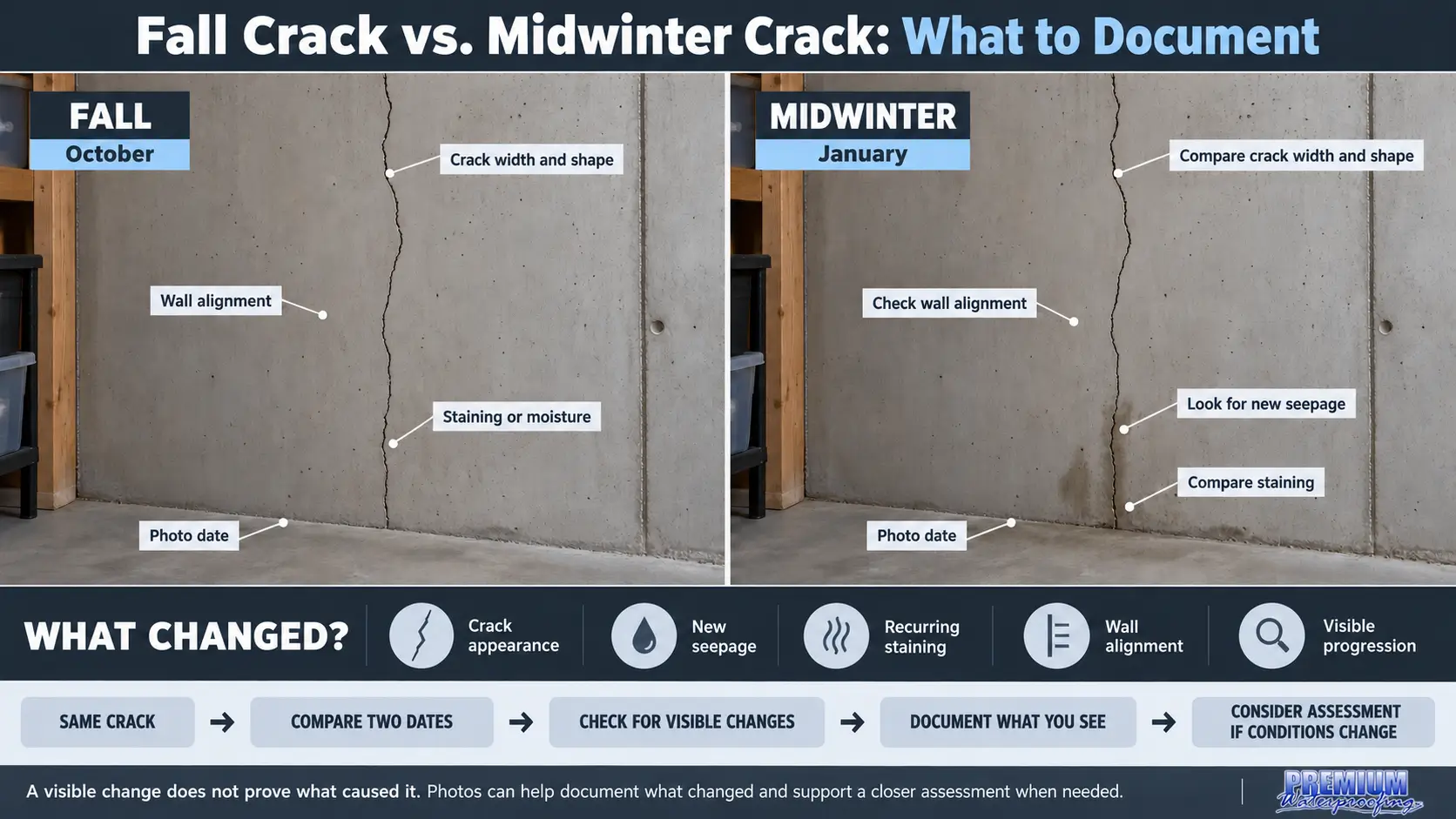
Good records make it easier to tell whether a crack is changing. Photograph the same area from the same position and record what you can actually see.
Compare crack appearance, new or recurring staining, seepage, wall alignment, and the date of each photo. Keeping the viewing angle consistent makes small differences easier to recognize.
A fall-to-winter comparison can document whether something visibly changed, but a photograph cannot establish why it changed. Do not treat a wider-looking crack, staining, or seepage as proof of freeze-thaw damage or structural movement without other evidence.
Can Foundation Cracks Become Wider in Freezing Weather?
Winter conditions can affect concrete and moisture, but a wider-looking crack does not establish one specific cause. Compare the crack with earlier photos and check for seepage, displacement, staining, or other visible changes.
Does Water in a Crack Mean the Foundation Is Moving?
No. Water shows that moisture has found a path into the basement. It does not prove structural movement.
Should a Leaking Crack Wait Until Spring?
A leaking crack does not need to be ignored simply because it is winter. Document active leakage and visible changes so the condition can be assessed and the appropriate repair can be considered.
Can I Monitor a Crack Instead of Repairing It?
Some stable cracks may be monitored. New leakage, movement, recurring staining, or visible progression gives you more reason to have the condition assessed.
A changing foundation crack needs to be understood before selecting a repair. Its history, moisture pattern, location, and visible movement can help distinguish water entry from a condition that may involve foundation movement.
Premium Waterproofing has protected homes and foundations since 1989 as a family-owned and operated company. Homeowners can check our Illinois waterproofing service areas to determine whether their property falls within the communities we serve.
New seepage or a visible change gives you useful evidence, but the crack still needs to be considered in context. The right response depends on what is happening at the wall rather than winter weather alone.
Our team handles foundation crack and basement water problems using solutions matched to the property and visible condition.
Seeing a Change in Your Foundation Crack?
If your foundation crack has started leaking or visibly changing,
contact Premium Waterproofing
Share what you’re seeing and find out what next step may be appropriate.